TRIAL 032× SPEED
Qwen (Fine-tuned)
FailedAdapter insertion
2× speed · muted
00:00HD ↗
Turning contact evidence into physical understanding—across tactile perception, comparison, and reasoning.
TouchReason-1M / TouchReason-Bench
1 Xiamen University 2 Great Bay University 3 Fudan University 4 Nanjing University 5 Daimon Robotics

Touch-R1 brings R1-style reinforcement learning to tactile reasoning. We build TouchReason-1M, a multi-sensor dataset with synchronized tactile-force records and verified reasoning QA, and TouchReason-Bench, a benchmark for tactile perception, ordinal comparison, cross-sensor consistency, and visual-tactile conflict. Touch-R1 combines ordinal-aware accuracy, cross-sensor physical consistency, structured-format control, and input-side tactile grounding, enabling MLLMs to revise visual priors using contact evidence.
Explore real-robot interaction, then compare model rollouts task by task.
IN SIMULATION / CASE EXPLORER
Choose a case. Compare the same task across three methods.
LIBERO Spatial · Case 43 · Recorded 1×
pick up the black bowl between the plate and the ramekin and place it on the plate
Preview speed · shared by all methods
Selected simulation cases · Outcomes per recording · Inference waits omitted · Clips hold their final frame.
These 10 examples were selected for Touch-R1 completion and Original Qwen non-completion: one LIBERO Spatial case and nine MetaWorld cases. They are curated demonstrations, not an aggregate benchmark success-rate sample.
GPT-6 Astra follows the model name supplied with these recordings; the backend model identity has not been independently verified. It uses zero-shot direct control; Qwen and Touch-R1 use action training, with different training budgets.
Source timing is preserved in the files: LIBERO 1× and MetaWorld 0.5×. The default 1× preview plays that source timing; the optional 2× preview multiplies all three methods equally without editing the recordings. Model-inference waiting time is omitted. Outcomes and action-step counts follow the supplied case manifest; clip duration is not an inference-speed measurement.
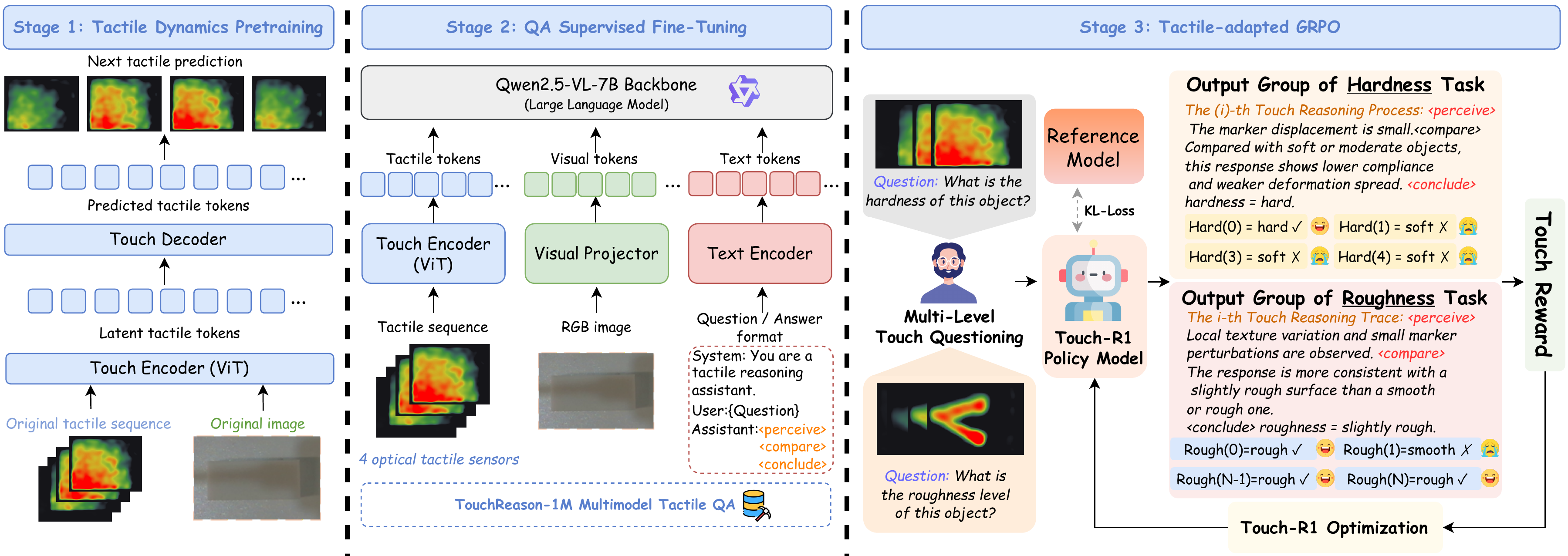
Source case metadata ↗Media provenance ↗Learn contact dynamics, connect touch to language, then reinforce reasoning grounded in physical evidence.
Pretrain a touch encoder by predicting future tactile tokens from contact histories.
Align touch, vision, and language to a structured reasoning interface.
Reward answers that are correct, consistent, parsable, and tactile-dependent.
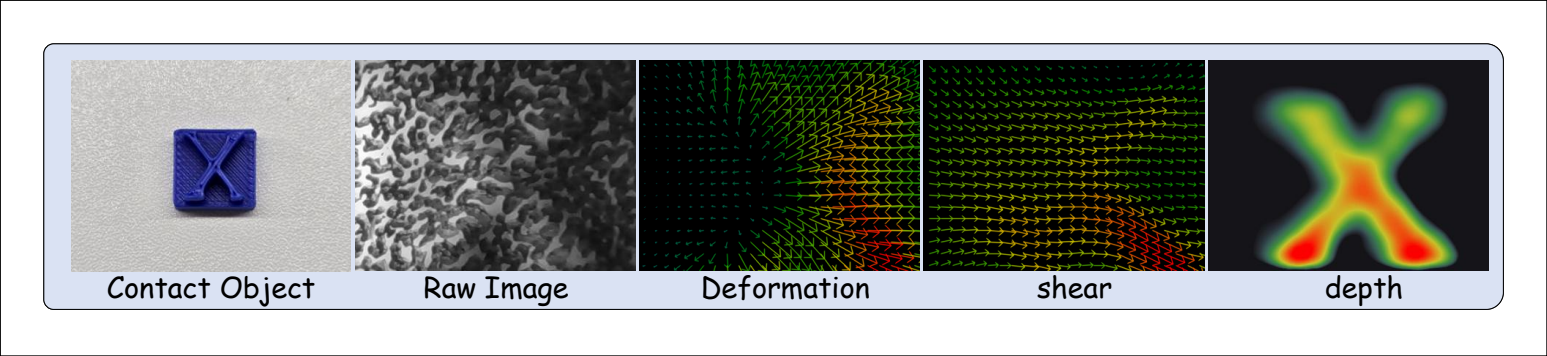
TouchReason-1M couples tactile frames, deformation fields, shear, depth, force, metadata, ordinal labels, and reasoning QA.
A handheld acquisition setup combines an optical tactile sensor, a six-axis force/torque sensor, and an integrated IMU. A RealSense D405 provides the external view.
View original device figure ↗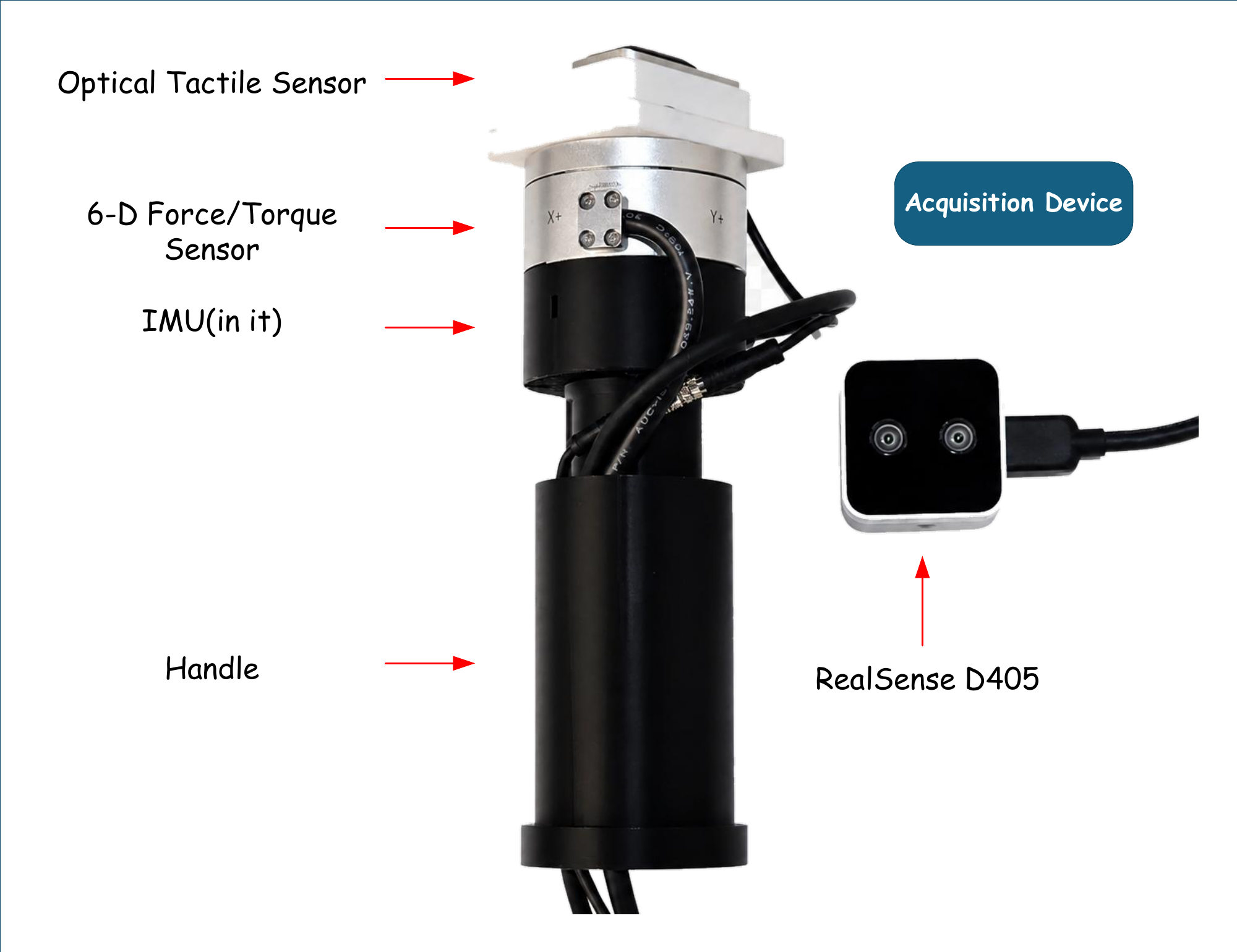
THE CONTACT COLLECTION / FIVE PAIRED RECORDINGS
Explore the external RGB view alongside the optical tactile response. Choose a sample below, then play both views together.
Source acquisition footage. Each sample pairs the external scene with its optical tactile recording, showing the contact and sensor response together.
THE OBJECT ATLAS / 80 COLLECTION SAMPLES
Everyday objects. Real surfaces.
A closer look at the diversity behind TouchReason-1M.
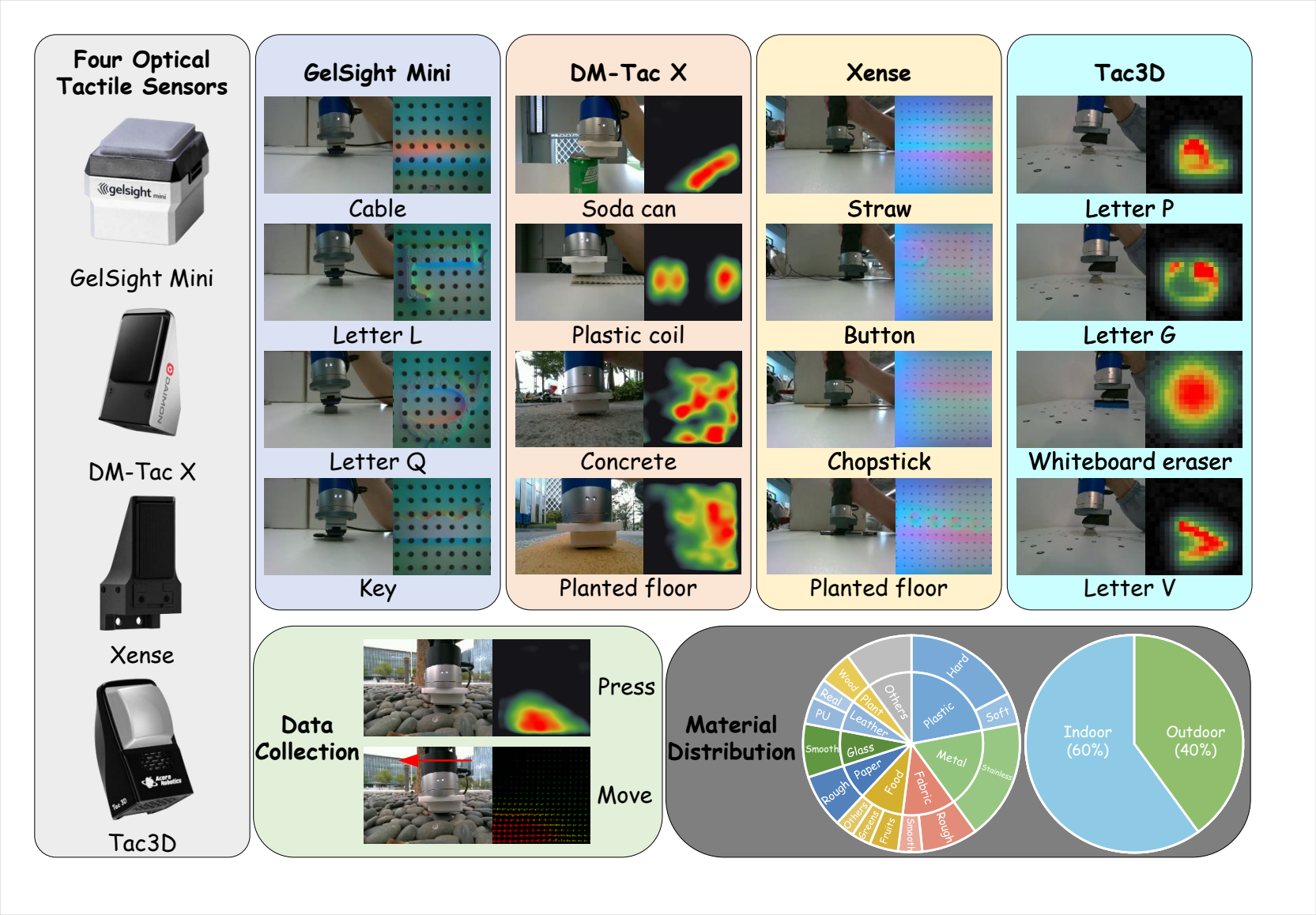
Touch-R1-7B outperforms frontier MLLMs, general VLMs, and tactile-specialist baselines on TouchReason-Bench.
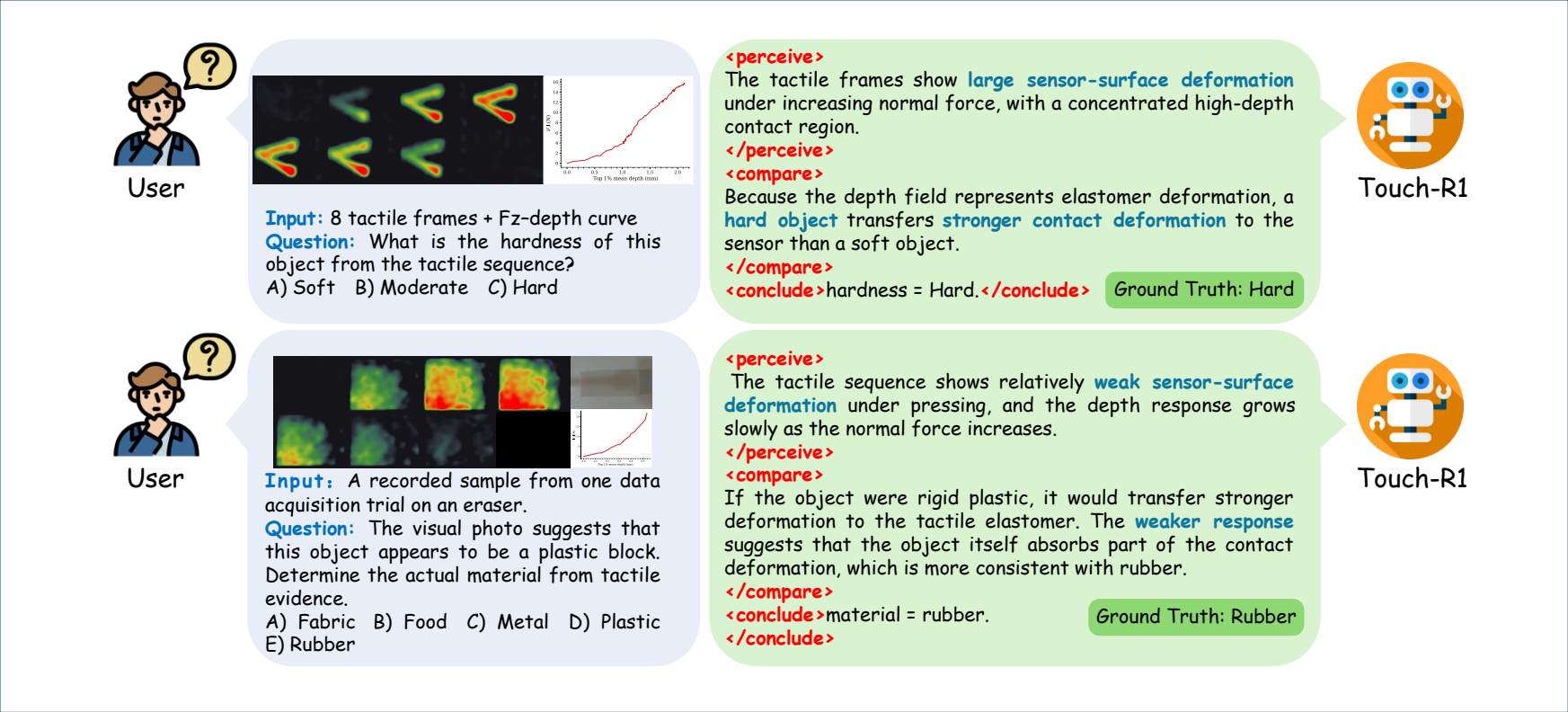
Tactile perception, comparison, and consistency.
Average scores on a 0–100 scale. Higher is better.
| Model | OMAE ↓ | L2-EM | CSC | Avg |
|---|---|---|---|---|
| Gemini-2.5-Pro | 0.67 | 13.8 | 41.8 | 37.6 |
| SToLa | 0.45 | 22.1 | 51.9 | 47.5 |
| Touch-R1-7B | 0.24 | 39.5 | 71.3 | 60.1 |
OMAE: ordinal error (lower is better). CSC: cross-sensor consistency.
QUALITATIVE COMPARISONS
Five cases. Three models. Actual answers.
Both baselines select large. Touch-R1 selects small, matching the source label.
Curated tactile QA · Verbatim answers · Fixed text replay, not inference latency. Source details ↗
Model-scale comparisons and controlled ablations isolate the contributions of training data and reward design.
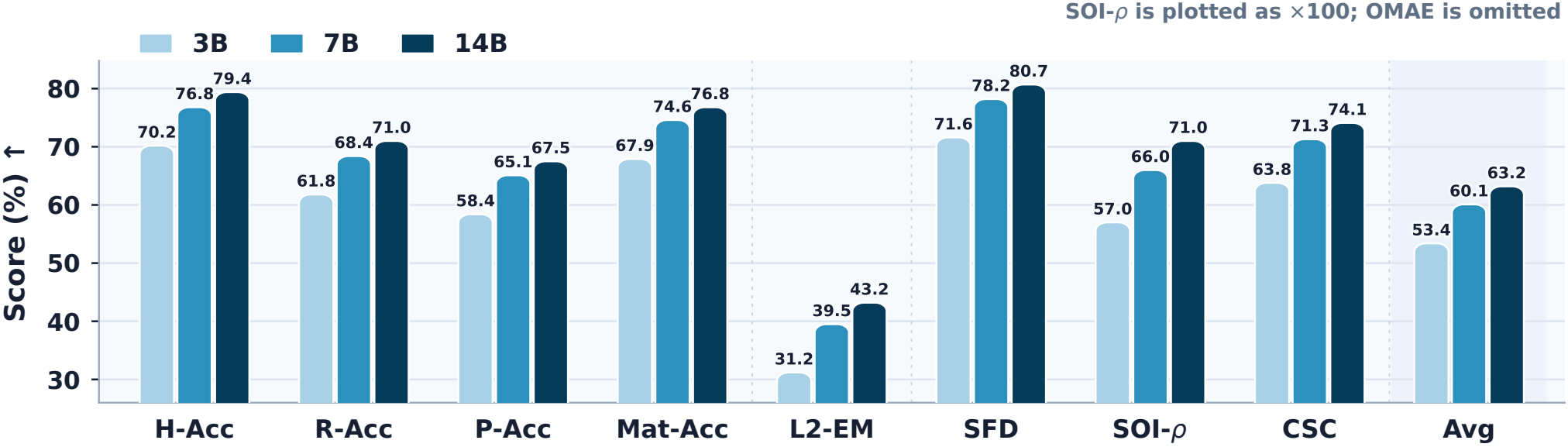
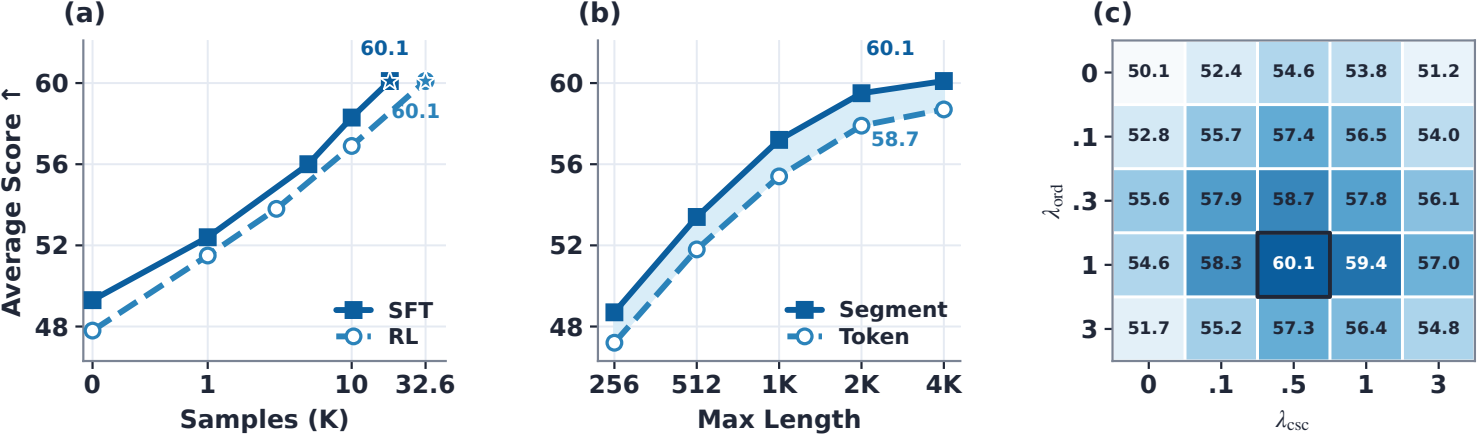
@misc{lai2026touchr1reinforcingtouchreasoning,
  title         = {{Touch-R1}: Reinforcing Touch Reasoning in {MLLMs}},
  author        = {Yingxin Lai and Yafei Zhou and Fucai Zhu and Siyu Zhu and Weihao Yuan},
  year          = {2026},
  eprint        = {2605.27154},
  archivePrefix = {arXiv},
  primaryClass  = {cs.CV},
  url           = {https://arxiv.org/abs/2605.27154}
}